38 Human-Research Ethics
(Modified on 2026-08-11)
633 words
For the most part, treating human participants is pretty intuitive. Ethical concerns in human-participant research are rooted in horrendously immoral research programs in the mid-20th century (Nazis, CIA, etc.). In comparison, the ethics of music work can feel absurdly trivial. That doesn’t mean we can ignore the issue, but for the most part it’s not difficult to manage.
The fundamental ethical concerns in human-participant research can be summarized with the following questions:
- What risks are there to participants?
- This may be weighted against the benefits of the research, but generally there should be no risk.
- How do participants consent?
- Participants must knowingly consent, and can always revoke their consent at any time.
- How is data kept confidential?
- Data about participants, especially “identifiable” personal information, must be protected.
- Who are the participants?
- Some groups (children, prisoners, refugees, etc.) require special consideration.
IRB
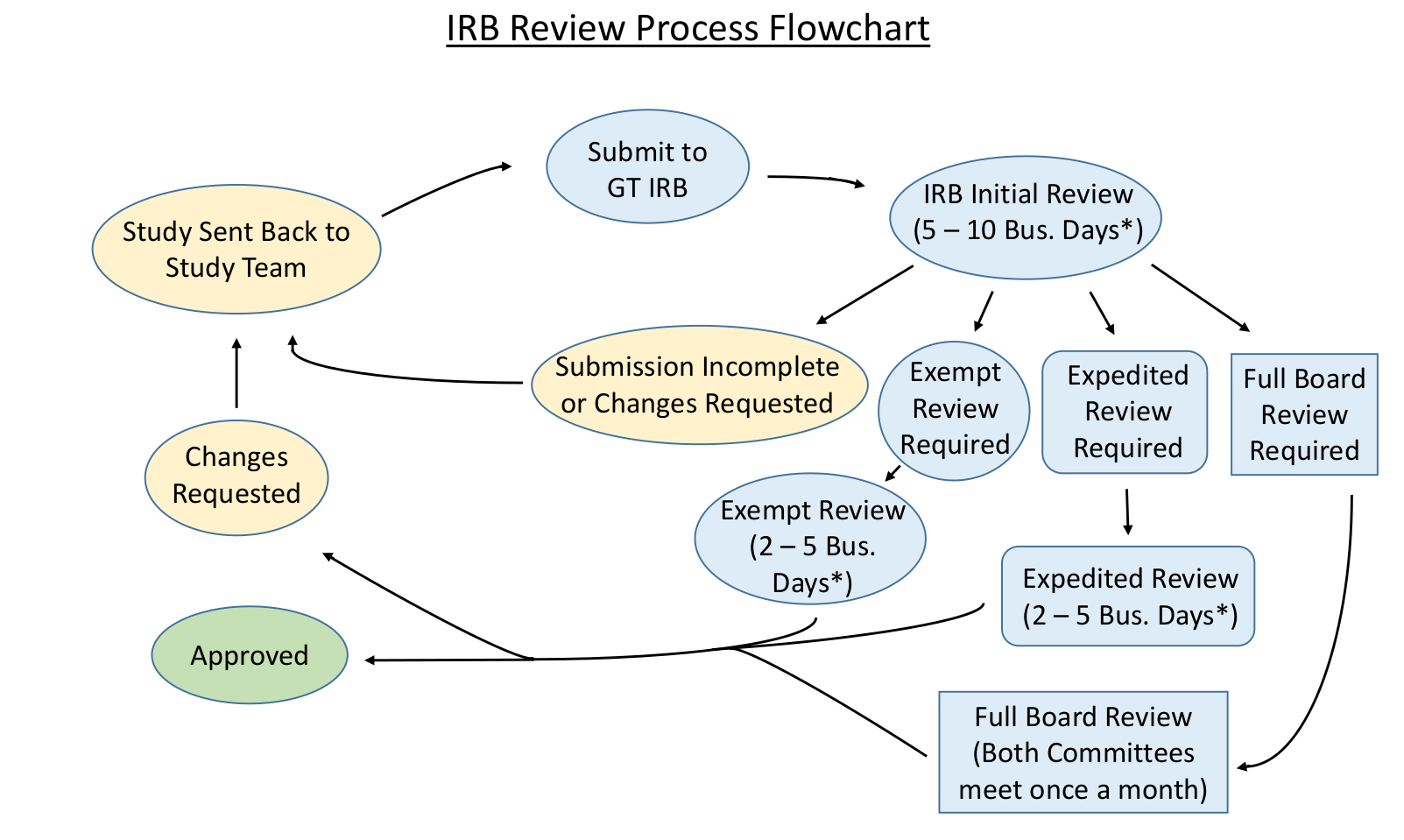
In the US, federal law requires human-participant research to be monitored and approved by official committees called Institutional Review Boards (IRB). (Similar ethics requirements and committees exist in all major nations—doing international research can require getting independent approval from ethics committees in multiple countries.) Major research institutions have their own IRBs, like Georgia tech’s IRB. Private companies must collaborate with these institutions, or work with private IRB firms.
In order to get IRB approval at GATech, researchers need to go through training from the CITI program. The CITI training is done online, taking 6–8 hours (but it can be broken up). You will need to do this before you (or your advisor) can submit any IRB protocols with your name on them, so it needs to be done well in advance. It’s not uncommon to see GTCMT research projects delayed by a week or more because students don’t anticipate this—if you aim to work with human participants for your Masters research, try to get the CITI training out of the way over winter break.
Protocols
At GAtech, any behavioral research must have an approved IRB “protocol” prepared in advance. But do we have to? If you plan to publish (or otherwise publicly utilize) anything based on human-data, yes. If the research is only being done for a class, no.
For most behavioral music research, we should be able get what’s called an exempt review; which is the easiest/quickest way to get approval. You can get exempt review if:
- The study poses no risk, beyond “normal daily activities.”
- We do not touch our participants.
- The study does not involve minors or other protected groups.
- We gather no “identifiable information” (e.g., names, addresses).
- If you do gather identifiable info, it might be OK if 1) the data is secure and 2) there is no risk associated with the data leaking.
Most self-report/behavioral research in the GTCMT fits all these criteria. To get exempt review (if your study qualifies), all you have to submit is:
- A brief description of the study.
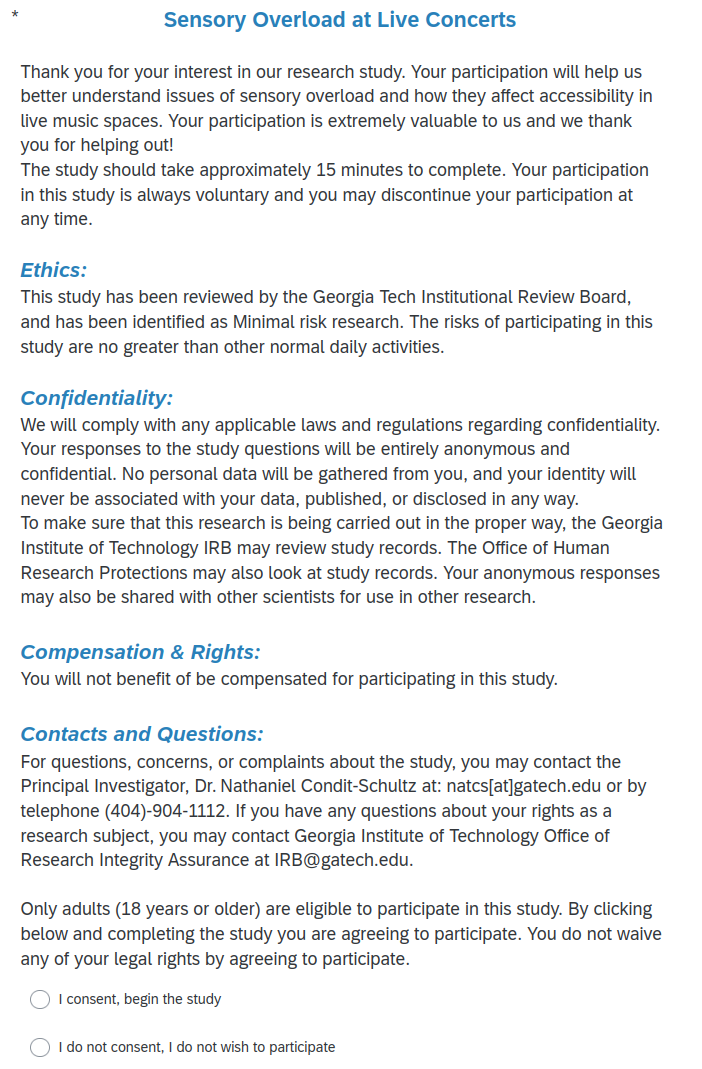
- A consent form (this is the most important part).
- A recruitment document.
- Screenshots or images of the survey/questions/task you will be giving to participants.
Consent
Here is an example of a simple consent form, which could be adapted for most simple music psychology or musical user studies:
Recruitment
Here is an example of recruitment letter, which can be used as a template for emails, posts, or posters used to recruit participants. Note that document mentions that there is no compensation, and an estimate of the total time involved.
Hi `___`


We are looking for volunteers to participate in a study we are conducting concerning XXX.
We'd love it if you would be willing to help us out.
The study will only take about 15 minutes of your time to complete.
Unfortunately, there would be no compensation to you, other than the good feeling of helping science!


Only adults (18 years or older) may participate.
If you are interested in participating, please contact Nat Condit-Schultz at natcs@gatech.edu.


Thanks!


Nat Condit-Schultz
There are two other “levels” of review, at GATech: expedited review and full review, which take longer. In these types of review, you’ll typically have to do at least one round of revisions. These sorts of reviews will be necessary if you, for example, want to work with minors, which requires more elaborate consent documents (for the parents) and assent documents (for the child).